
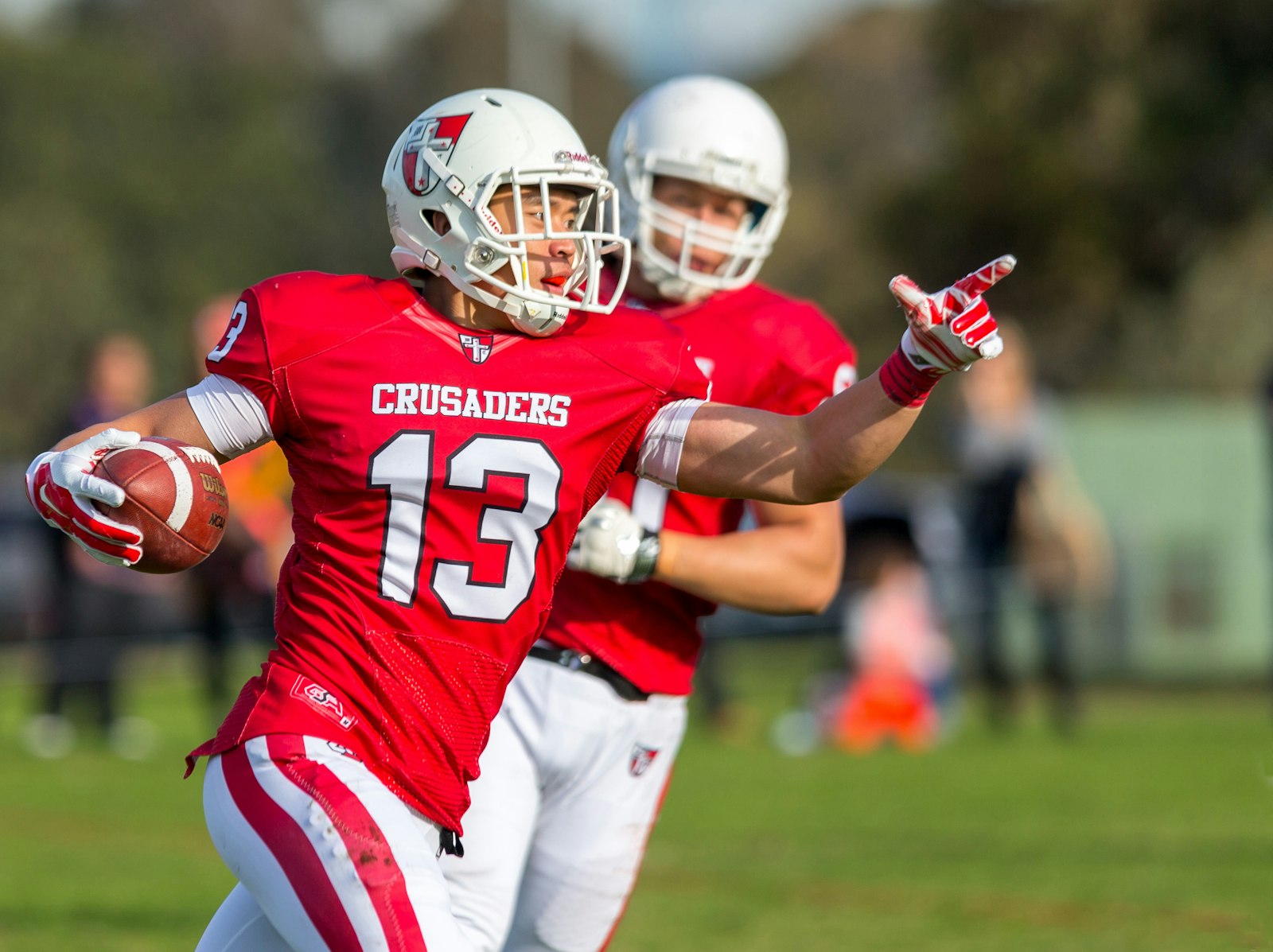
Fall is the busiest stretch on most sports medicine calendars, and the reason is straightforward: the fall sports season crowds the year's highest-participation, highest-contact activities into the same twelve weeks. Football, soccer, volleyball, and cross country all start within days of each other, right as millions of student-athletes come off a summer of reduced training.
For anyone who owns — or is weighing whether to open — a sports medicine clinic, that surge isn't a curiosity. It's a planning problem worth getting ahead of, because the practices that handle fall well are usually the ones that saw it coming.
What actually makes fall the peak
Start with the sheer size of the fall sports population. In 2023-24, a record 8,062,302 students played high school sports, and 11-player football — a fall sport — remained the single most popular boys' sport at 1,031,508 participants, according to the National Federation of State High School Associations. Add fall soccer, volleyball, and cross country, and a large share of the country's organized youth athletics is happening at the same time, on the same weeks of the calendar.
Then layer on timing. Summer tends to be quieter — school is out, structured practices pause, and many athletes train less or differently. When August arrives, preseason conditioning ramps quickly, often faster than deconditioned bodies are ready for. Two-a-day practices in late-summer heat, sudden jumps in mileage, and the return to full-contact drills compress a lot of physical stress into a short window.
Adults feel the shift too. Cooler weather pulls weekend runners, recreational-league players, and returning-to-the-gym exercisers back into activity after a slower summer. What results is a broad, overlapping wave of demand: school-age athletes, competitive club players, and everyday adults all ramping up together.
There's an administrative spike layered on top. The new school year requires sports physicals and preparticipation exams before athletes can compete, which pushes a distinct kind of appointment volume into late summer and early fall — often a clinic's first contact with a family that will be back later in the season.
The kinds of injuries fall sends through the door
The fall mix is unusually broad, which is part of why it strains a single-discipline practice. Contact and collision sports bring acute injuries — ankle sprains, knee ligament strains, shoulder problems, fractures, and concussions among them. Endurance sports like cross country tend toward overuse patterns: shin splints, stress reactions, and tendon irritation that build as weekly mileage climbs.
Preseason is its own risk window. Athletes returning from a summer layoff can be more susceptible to soft-tissue injuries in the first few weeks of practice, before conditioning catches up to the demands of competition. Much of what a clinic sees in September and October has less to do with a single dramatic moment and more to do with bodies being asked to do too much, too soon.
That variety shapes how a clinic needs to be built. A pulled hamstring, a concussion, a stress fracture, and a nagging case of runner's knee don't all route to the same provider. A practice that can only address one of them ends up sending the rest elsewhere.
Why seasonality is an operating question, not just a clinical one
Knowing fall is busy is the easy part. Being ready for it is an operations exercise. Staffing has to flex — clinics often plan provider coverage, hours, and scheduling capacity around the season rather than staffing flat year-round. The front desk feels the change first, in appointment requests and the cadence of follow-ups.
Relationships drive much of the fall workload, too. Schools, club teams, and athletic trainers are the connective tissue between an injured athlete and a clinic. Owners who build those relationships before the season — offering sideline coverage, running physicals, or simply being the practice a local athletic trainer trusts — sit in a very different position than those scrambling once the calendar turns.
None of that is something an owner should have to figure out alone. Franchise systems exist in part to hand owners a playbook for exactly these rhythms. Our overview of the support an Alpha Sports owner receives covers how operational systems, training, and marketing are structured so a new owner isn't inventing a seasonal plan from scratch.
How an integrated model absorbs the surge
This is where the shape of the clinic matters most. A fall caseload is multidisciplinary by nature — the same season produces acute injuries, overuse injuries, concussions, and the rehabilitation that follows all of them. A single-specialty practice meets that with referrals out the door.
An integrated clinic is built to keep more of that care in-house. When chiropractic, physical therapy, massage therapy, athletic training, and related disciplines operate as one team, a student-athlete with a sprained ankle can move from assessment to rehab to return-to-play without being handed off to three separate offices. If the concept is new to you, our primer on what integrated sports medicine actually means walks through how the disciplines fit together.
The practical payoff during a busy season is resilience. When demand climbs and the injury mix is wide, a clinic that can treat across disciplines has more ways to serve each patient — and more room to absorb the wave — rather than routing much of it to whoever has an opening across town.
The busy season is also a relationship season
Fall's value to a clinic isn't confined to fall. An athlete who comes in for a preseason physical, returns for an in-season injury, then stays for rehab has entered a relationship that can extend well past the final game. Recovery doesn't end when the season does, and neither does the reason to stay connected — offseason strength work, injury-prevention programs, and next year's physicals all follow.
That continuity is why the seasonality story ties back to the broader case for the category. Sports medicine demand is durable and spread across the year; fall simply concentrates it. We lay out the long-run picture in our look at whether sports medicine is a growing industry, and the autumn peak is one of the most visible expressions of that steady, needs-based demand.
What it means if you're planning or evaluating a clinic
For a prospective owner, fall is a useful lens. It shows why breadth of service matters, why local relationships are worth building early, and why operational readiness — not just clinical skill — separates a smooth season from a chaotic one. A clinic doesn't have to be everything to everyone, but a sports medicine practice that can only handle one slice of the fall caseload leaves a lot of care, and a lot of community trust, on the table.
It also reframes what you're weighing when you evaluate a franchise. The question isn't only whether the demand is there — the fall calendar answers that plainly — but whether the model helps you meet it. Breadth of disciplines, operational support, and a system that understands the seasonal rhythm all factor in. Our overview of the Alpha Sports opportunity is a good next step if you want to see how those pieces line up.
Thinking about owning an integrated sports medicine clinic, or want to understand how the model handles a busy fall? Reach out to the Alpha Sports franchise team at franchise@ASPMFranchise.com or call (402) 852-5742 to talk through exclusive territory availability across Texas and what ownership involves.
Frequently asked questions
Why is fall the busiest season in sports medicine?
Fall packs the year's highest-participation sports into a single stretch. Football — the most popular high school sport in the country — plus soccer, volleyball, and cross country all run at the same time, right as athletes ramp back up from a quieter summer. The overlap of high participation, contact sports, and rapid preseason conditioning concentrates injuries into a few months.
What injuries are most common in the fall?
The fall caseload is broad. Contact sports can produce acute injuries such as ankle and knee sprains, fractures, and concussions, while endurance sports more often bring overuse issues like shin splints and stress reactions. Preseason itself is a notable risk window, as athletes return from a summer layoff before their conditioning has caught up.
How does an integrated clinic help during the fall surge?
Because the fall injury mix spans several disciplines at once, an integrated clinic can treat more of it under one roof — moving a patient from assessment through rehabilitation without referring them elsewhere. That breadth gives a practice more ways to serve each patient and more capacity to absorb a seasonal spike in demand.
Download Our FREE eBook for More Information!
Get Our FREE eBookPhoto by John Torcasio on Unsplash