
Dallas-Fort Worth is one of the strongest markets in the country for a new integrated sports medicine clinic, and Alpha Sports Performance Medicine is awarding exclusive territories across Texas — the DFW region included. The short version for anyone weighing an investment here: the Metroplex pairs some of the fastest population growth in the nation with a deep sports culture and a healthcare workforce expanding faster than the broader economy. Which specific territories are open shifts over time, so the practical first move is to confirm current availability with the franchise team.
What makes North Texas worth a serious look isn't any single statistic. It's the way several trends stack in the same direction — more people, more athletes, and more demand for the kind of care that keeps them moving. Here's the market data behind the opportunity, and an honest picture of how territory availability actually works.
Why Dallas-Fort Worth stands out on the map
Start with raw scale. The Dallas-Fort Worth-Arlington metro added 177,922 residents between July 2023 and July 2024 to reach a total of 8,344,032 — the third-largest numeric population gain of any U.S. metro area, according to the U.S. Census Bureau. Only the New York and Houston metros grew by more in absolute terms.
Growth on that scale does two things for a healthcare business. It widens the pool of potential patients every single year, and it keeps pushing outward into the suburbs and exurbs where families put down roots — Collin, Denton, and Tarrant counties among the fastest-growing in the region. New rooftops bring new schools, new youth leagues, new gyms, and steady demand for the services an integrated clinic is built to deliver.
A market this large is rarely served well by one downtown practice. DFW is really a constellation of distinct communities — Plano, Frisco, Arlington, McKinney, Denton, and dozens more — each populous enough to support a clinic of its own. That fragmentation is a big part of why an exclusive-territory model fits a metro like this so naturally.
The demand drivers behind a DFW sports medicine clinic
Population is the backdrop. The sharper question is who inside that population actually needs sports medicine care — and in North Texas, the answer runs deep across every age group.
A youth-sports stronghold
Texas fields more high school athletes than any other state — 515,383 boys and 364,020 girls in the 2023-24 school year, according to National Federation of State High School Associations data. Football draws the headlines, but the same students play club soccer, run track, wrestle, and compete in volleyball and basketball nearly year-round. Each of those athletes is a potential candidate for injury assessment, rehabilitation, and performance work, and few regions live and breathe that culture like the Metroplex.
An active adult population that keeps moving
Youth sports are only the front door. DFW's adults run half-marathons, fill CrossFit boxes and boutique studios, cycle the trails, and pick up the weekend-warrior injuries that come with staying active into their forties, fifties, and beyond. Add the desk-bound professionals managing the neck, back, and shoulder strain of office work, and the picture is a community that treats movement and recovery as part of ordinary life — not something reserved for elite competitors.
A healthcare workforce growing faster than the economy
The labor data points the same way. The U.S. Bureau of Labor Statistics projects employment of chiropractors to grow 10 percent from 2024 to 2034 — more than three times the all-occupations average — and physical therapist employment to grow much faster than average over the same period. Those national trends land hardest in fast-growing metros like DFW, where the population feeding that demand is expanding faster than the country as a whole.
Here's how those pieces fit together:
| Market signal | What the data shows | Source |
|---|---|---|
| Metro population | 8,344,032 residents; +177,922 in one year (3rd-largest U.S. gain) | U.S. Census Bureau |
| Youth athletes (statewide) | 515,383 boys and 364,020 girls in high school sports, 2023-24 — most of any state | NFHS |
| Chiropractor employment | Projected +10% nationally, 2024–2034 | U.S. Bureau of Labor Statistics |
| Physical therapist employment | Projected to grow much faster than average, 2024–2034 | U.S. Bureau of Labor Statistics |
How territory availability works in Dallas-Fort Worth
This is the question most prospective owners ask first, and it deserves a straight answer. Alpha Sports awards exclusive territories, which means the owner of a given market isn't competing with another Alpha clinic next door. In a metro the size of DFW, that structure carves the region into defined service areas rather than dropping everyone into one crowded pool.
Because availability changes as territories are claimed, it wouldn't be honest — or accurate for long — to publish a map of exactly which DFW markets are open today. Some communities may be available now; others may already be spoken for by the time you read this. The reliable way to find out is to ask. The franchise team can walk you through which service areas across the Metroplex are currently open and how the boundaries are drawn.
If you're comparing the region against the rest of the state, our overview of opening a sports medicine clinic in Texas lays out how the Alpha model travels from market to market.
What it takes to own an Alpha Sports clinic
Two questions usually follow the territory conversation: what does it cost, and who is allowed to own one?
On cost, the figures come straight from the Franchise Disclosure Document. The franchise fee is $50,000, and the total estimated initial investment ranges from $405,950 to $605,320. Those are the only investment numbers Alpha publishes, and the full breakdown lives in the FDD your franchise representative will provide.
On ownership, the model is deliberately broad. Chiropractors, physical therapists, and athletic trainers can build a clinic around their own discipline and bring in the rest of the team. So can healthcare entrepreneurs and investors who aren't clinicians at all — under the operator-owner structure, a non-clinician runs the business while licensed providers deliver care. If that path interests you, start with the Alpha Sports opportunity overview to see how the pieces come together.
Why an integrated model fits a metro this big
Scale rewards breadth. Picture a single patient in Frisco: a teenage soccer player with a nagging knee. She may need a chiropractor to assess joint function, a physical therapist to build the rehab plan, a massage therapist for soft-tissue work, and someone to manage training load so she doesn't re-injure it walking back onto the field. In a fragmented market, that's four appointments in four locations.
An integrated clinic puts all of it under one roof. That's the heart of the Alpha approach — integrated sports medicine, where multiple provider disciplines operate as one clinical team so patients are treated end-to-end rather than referred out. In a metro where families are pressed for time and options are everywhere, being the place that can handle the whole recovery is a real advantage. It's also why the demand trends above matter more together than any one of them does alone; you can read the fuller case in our look at whether sports medicine is a growing industry.
Your next step in the DFW market
Dallas-Fort Worth checks the boxes a careful owner looks for: a large and fast-growing population, a sports culture that generates steady demand, and a healthcare workforce projected to outpace the wider economy. What it can't tell you from a webpage is whether the specific community you have in mind is still available — and that's the one detail worth confirming before anything else.
To check current DFW territory availability and talk through the model, contact the Alpha Sports franchise team at franchise@ASPMFranchise.com or call (402) 852-5742.
Frequently asked questions
Are sports medicine franchise territories still available in Dallas-Fort Worth?
Exclusive territories are available across Texas, and the DFW region is part of that footprint. Because markets are claimed over time, availability in any specific community can change. The current picture for the Metroplex is something the franchise team can confirm directly — reach out through the contact page for an up-to-date answer.
How much does it cost to open an Alpha Sports clinic?
Per the Franchise Disclosure Document, the franchise fee is $50,000 and the total estimated initial investment ranges from $405,950 to $605,320. Those are the only investment figures Alpha publishes; your franchise representative can walk you through the full FDD.
Do I have to be a licensed clinician to own a clinic in DFW?
No. Chiropractors, physical therapists, and athletic trainers can anchor a clinic in their own discipline, but non-clinician entrepreneurs and investors can own one too. Under the operator-owner model, licensed providers deliver care while the owner runs the business. The opportunity overview explains how both paths work.
Why does Dallas-Fort Worth make sense for an integrated sports medicine clinic?
The metro is large, growing fast, and rich in both youth and adult sports activity, while the healthcare occupations that staff these clinics are projected to grow faster than the economy overall. Those conditions support demand for the multidisciplinary, whole-person care Alpha is built around.
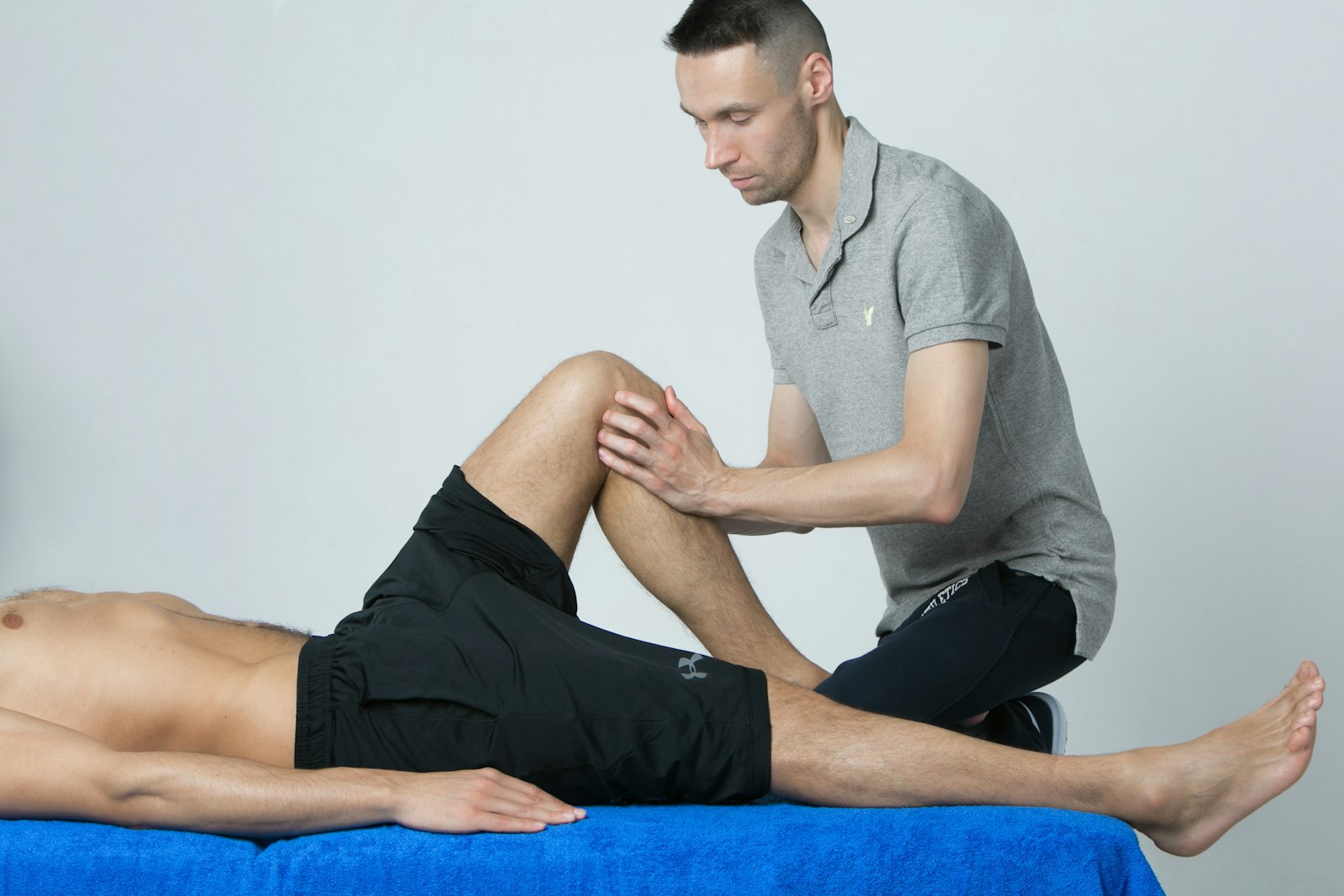
Photo by yury kirillov on Unsplash