
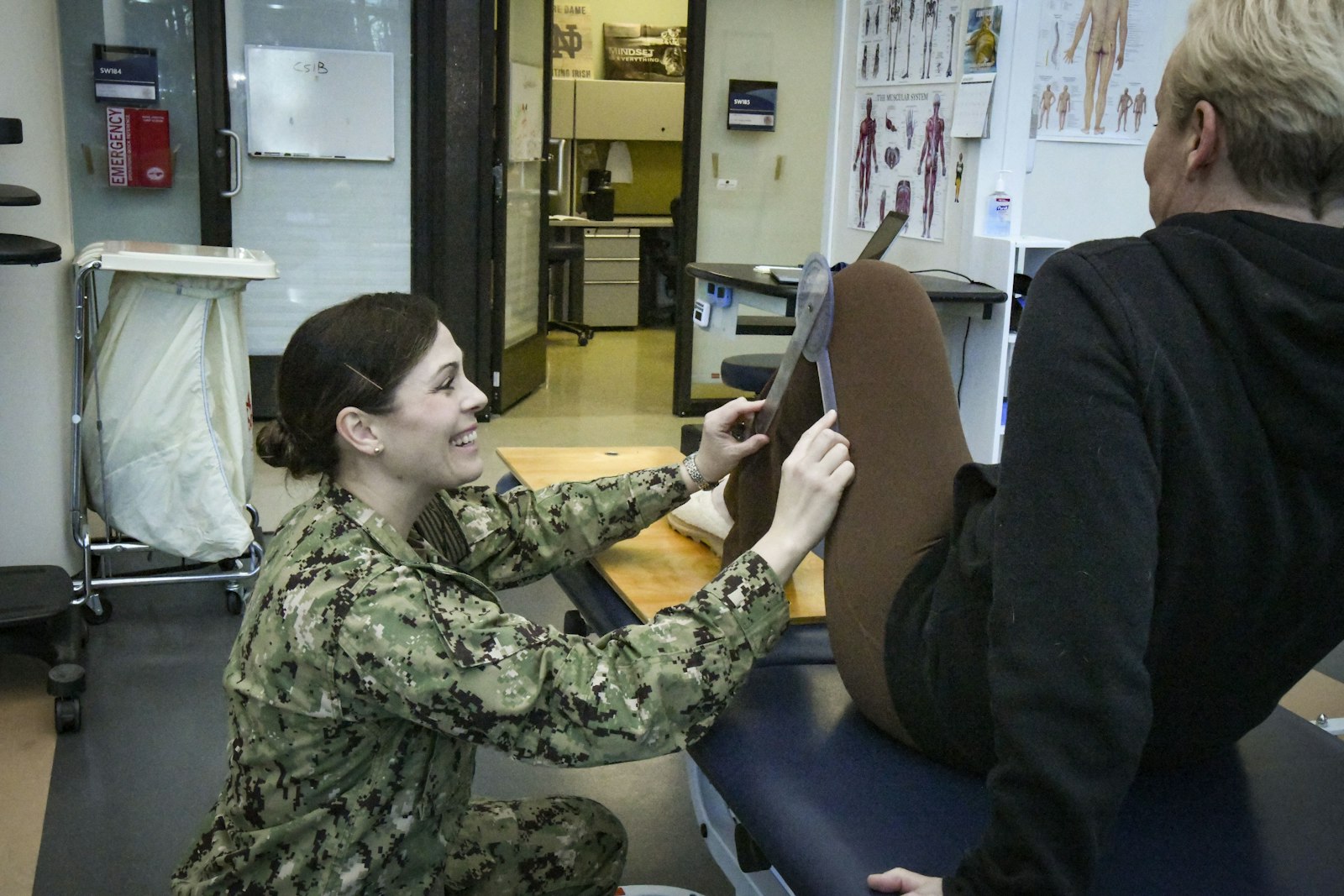
An integrated sports medicine clinic runs on six provider disciplines working as one team: chiropractic care, physical therapy, massage therapy, athletic training, dietetics, and sports psychology. Rather than six separate businesses that happen to share a lobby, they share one treatment plan, one patient record, and one goal — moving each patient from injury or limitation back to full function.
That single structural choice shapes everything about how the clinic feels to a patient and how it runs as a business. What follows is a plain look at what each of the six disciplines does, how they hand off to one another, and why the combination — not any one of them alone — is the point.
What makes a clinic “integrated,” not just co-located
Plenty of buildings house a chiropractor down the hall from a massage therapist. That is co-location, and from the patient’s chair it can feel like being handed a stack of business cards. Integration is a different thing. The providers meet, review the same chart, and agree on who leads a given phase of care and who supports it.
The practical test is simple: when a patient’s needs cross a disciplinary line, does the plan travel with them, or do they start over? In an integrated clinic the plan travels. One provider’s notes are the next provider’s starting point, and a change in one lane — a knee that’s finally bearing weight, a nutrition tweak that speeds healing — reaches the rest of the team without the patient having to relay it. We unpack that distinction in more depth in our overview of what integrated sports medicine actually means. Here the focus is the six roles that make it work.
The six provider disciplines under one roof
1. Chiropractic care
Chiropractic is often the front door. A patient arrives with back pain, a stiff neck, or a joint that isn’t moving the way it should, and the chiropractor assesses how the spine and joints are functioning. Treatment can include manual adjustment, mobilization, and soft-tissue work aimed at restoring movement and easing pain without drugs or surgery. In a sports setting, chiropractors also look for the biomechanical faults that make injuries repeat — the reason a runner’s knee keeps flaring, for instance — so the work addresses the cause and not only the symptom.
2. Physical therapy
Where chiropractic often restores motion, physical therapy rebuilds capacity. Once a joint moves freely, a physical therapist designs a progressive program to restore strength, stability, and range so the tissue can handle real load again. PT carries much of the week-to-week work of recovery after an injury or surgery: measured progressions, corrective exercise, and objective checkpoints that show whether a patient is ready for the next step. Because progress gets tracked in numbers, the rest of the team can read it at a glance and time their own work around it.
3. Massage therapy
Massage therapy handles the soft-tissue side of recovery. Skilled hands-on work can ease muscle tension, support circulation, and help a patient recover between hard training blocks or move more comfortably through rehab. It rarely works in isolation. A massage therapist may loosen the tissue around a joint so a chiropractic adjustment holds longer, or keep a rehabbing muscle supple so the physical therapist’s exercises land better. Modest on its own, it frequently makes the other disciplines more effective.
4. Athletic training
Athletic trainers live at the intersection of injury care and performance. They are trained to evaluate and manage musculoskeletal injuries, guide return-to-play decisions, and coach the movement patterns that keep injuries from coming back. In an integrated clinic, the athletic trainer is often the thread connecting treatment to real-world activity — translating what happens on the table into what a patient does on the field, in the gym, or at a desk. They also tend to be the team’s eyes on training load: how much, how soon, and when to hold someone back.
5. Dietetics and nutrition
Recovery and performance both run on fuel, and dietetics brings that into the plan. A dietitian can help a patient support tissue healing, manage body composition for their sport, or build eating habits that hold up across a long season. This is the discipline patients least expect to find inside a sports medicine clinic, and often the one that ties the rest together — a well-built rehab program can stall if the body isn’t getting what it needs to rebuild. Guidance here is individualized to the person and their goals rather than pulled from a generic handout.
6. Sports psychology
The sixth discipline addresses the part of recovery that lives between the ears. Coming back from a serious injury is as much mental as physical: fear of re-injury, lost confidence, and the grind of a slow timeline can all stall progress even when the body is ready. Sports psychology gives patients tools to manage that side — focus, motivation, and resilience — and rounds out a model built on treating the whole person rather than the injured part. For competitive athletes, the same skills often carry straight over to performing under pressure.
How the six work as one team
The value shows up the moment a single patient needs more than one of them. Picture a recreational soccer player with a nagging knee. The chiropractor assesses joint function and restores movement. The physical therapist builds the strength-and-stability program that protects the knee under load. A massage therapist keeps the surrounding tissue loose so both hold. The athletic trainer guides the return to play so the athlete doesn’t rush back and re-injure it. A dietitian supports healing through the process, and if the injury has rattled the player’s confidence, sports psychology helps them trust the knee again.
In a fragmented setup, that is six phone calls, six intake forms, and a patient trying to be their own care coordinator. Under one roof, it is one plan the whole team can see. That coordination is a large part of the difference between a single-discipline practice and an integrated clinic, and it is a big reason a patient is more likely to finish care rather than drift away halfway through.
| Discipline | Primary focus | A patient often comes for |
|---|---|---|
| Chiropractic care | Joint function and movement | Back, neck, or joint pain and stiffness |
| Physical therapy | Strength, stability, and rehab | Recovery after an injury or surgery |
| Massage therapy | Soft-tissue recovery | Muscle tension and recovery support |
| Athletic training | Injury management and return to play | Getting safely back to sport or activity |
| Dietetics | Nutrition for healing and performance | Fueling recovery and training |
| Sports psychology | The mental side of recovery | Confidence and focus after injury |
Why the six-discipline model matters if you’re weighing ownership
For a prospective owner, the six disciplines aren’t just a menu of services — they’re the architecture of the business. A clinic that can treat a patient end-to-end keeps care, and the relationship, in-house instead of referring it out, and it serves people at every stage: the injured, the recovering, and the healthy patient who wants to stay that way. Each discipline also opens a different door into the community, from the weekend athlete to the parent managing a desk-job backache.
The model also widens who can own one. Because licensed clinicians deliver the care, the owner doesn’t have to personally hold all six credentials — or any of them. A chiropractor or physical therapist can grow past the ceiling of a solo practice, while an operator from outside healthcare can build the business around a credentialed clinical team. How Alpha structures that, and the training and support behind it, are laid out in the franchise opportunity overview.
On the figures a prospective owner usually asks about first: Alpha Sports Performance Medicine lists a $50,000 franchise fee and a total estimated initial investment of $405,950–$605,320 in its Franchise Disclosure Document. Exclusive territories are available across Texas, and the franchise team can walk you through which markets fit your background and goals.
See the six-discipline model for yourself
Reading about six disciplines is one thing; watching them hand a patient down the line is another. If the integrated model is something you would consider building in your community, the next step is a conversation. Reach out to the Alpha Sports franchise team at franchise@ASPMFranchise.com or call (402) 852-5742 to talk through territories, ownership paths, and what it takes to open a clinic where all six disciplines work as one.
Photo by Navy Medicine on Unsplash