
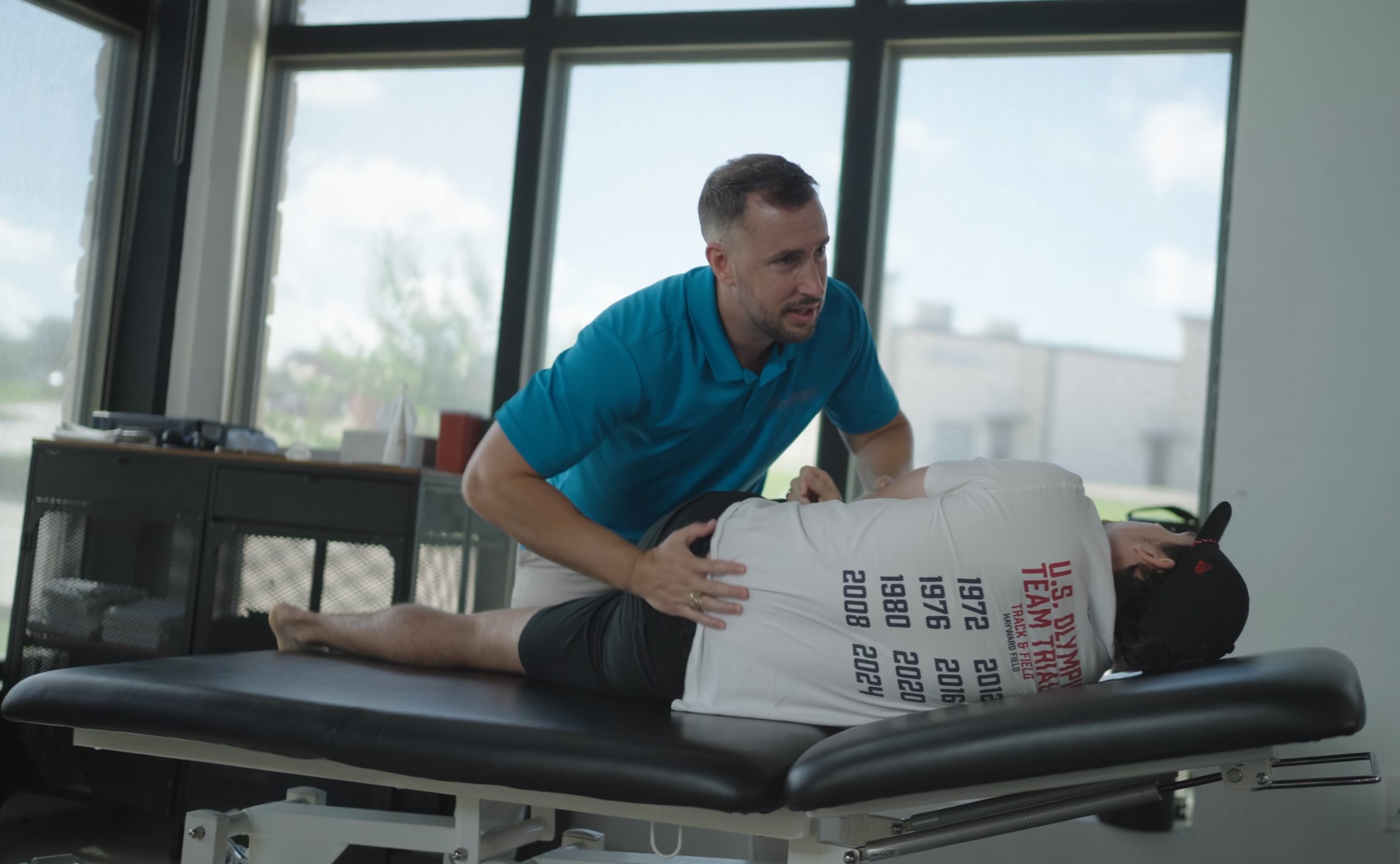
Most businesses generate revenue in one direction: a customer arrives, a transaction occurs, and the customer leaves. That model works across countless industries, but it is not the model that produces the most durable returns. The businesses that consistently outperform — across economic cycles, competitive pressures, and shifting consumer preferences — are built on layered revenue streams that reinforce one another. They do not depend on a single service or a single customer decision to stay solvent.
Integrated sports medicine is one of the few healthcare sectors where that kind of multi-stream structure exists by design. A well-built sports medicine clinic does not offer one service. It offers a coordinated ecosystem of services — chiropractic care, physical therapy, performance rehabilitation, dry needling, shockwave therapy, massage therapy — each of which generates its own revenue, serves its own patient need, and feeds demand back into the others.
This is the economic architecture of the Alpha Sports Performance Medicine franchise model. Understanding how it works — and why it matters — is the most important first step for any practitioner or business investor evaluating whether this opportunity fits their goals.
The Problem With Single-Service Healthcare Practices
Single-discipline clinics — standalone chiropractic offices, independent physical therapy practices, solo massage therapy studios — are not inherently poor business models. Many of them generate consistent, sustainable revenue for their owners. But they share a structural limitation that becomes more visible as the market for sports medicine and active patient care continues to grow.
A single-service clinic is dependent on a single revenue stream. If patient volume drops — due to seasonality, a competitor opening nearby, an insurance credentialing change, or any number of external factors — there is no internal cushion. Every patient who needs a service that the clinic does not offer has to go elsewhere, which means that patient's additional spending leaves the practice and may not return.
There is also a ceiling on patient loyalty in single-service models. A patient who completes a course of physical therapy and achieves their recovery goal has no reason to stay engaged with that clinic until the next injury. In contrast, a patient who is receiving coordinated chiropractic maintenance, regular soft-tissue work, and periodic performance assessments has ongoing reasons to maintain a relationship with a clinic — even in the absence of an acute complaint.
For practitioners considering clinic ownership, understanding this distinction is not a minor footnote. It is one of the most important structural decisions you will make when choosing what kind of practice to build.
How the Alpha Sports Integrated Model Creates Multiple Revenue Channels
Alpha Sports Performance Medicine operates as an integrated, multi-discipline clinical environment. That word — integrated — is used deliberately, because it describes something more specific than simply having multiple services available. Integration means that the providers within an Alpha Sports clinic work from shared patient information, coordinate care plans across disciplines, and make clinical decisions with awareness of what is happening in other areas of the patient's treatment.
That clinical coordination is what creates the business conditions for multiple stable revenue streams. Here is how each service layer contributes:
Chiropractic Care
Chiropractic services form a core revenue channel within the Alpha Sports model and serve as the most common point of first contact for patients presenting with musculoskeletal complaints. Initial evaluations, spinal adjustments, extremity manipulation, and functional assessments generate consistent visit volume with a relatively high frequency of return appointments. Established chiropractic patients — particularly those managed for ongoing performance maintenance rather than acute injury only — tend to demonstrate strong retention over time.
Physical Therapy and Performance Rehabilitation
Physical therapy generates revenue through a distinct billing structure from chiropractic, typically involving evaluation codes, therapeutic exercise, neuromuscular re-education, manual therapy, and functional movement training. Post-surgical rehabilitation, sport-specific return-to-play programs, and performance-enhancement protocols all sit within this service line. The Alpha Sports model uses a Resiliency Training Model that extends traditional rehabilitation into performance preparation — expanding the scope of care and the duration of patient engagement beyond what a conventional PT episode typically covers.
Dry Needling and Soft Tissue Modalities
Dry needling, instrument-assisted soft tissue mobilization, and related manual therapies generate procedural revenue that complements primary chiropractic and physical therapy services. These modalities are frequently used as adjuncts within the same visit, increasing the per-visit revenue and improving clinical outcomes — which itself supports patient satisfaction and retention.
Shockwave Therapy
Extracorporeal shockwave therapy represents one of the higher-margin procedural services in the sports medicine environment. It is indicated for a range of conditions common to active patients — plantar fasciitis, patellar tendinopathy, calcific shoulder tendinosis, and chronic tendon pathologies that have not responded to conventional care. Shockwave therapy is typically delivered in short-series protocols, and patients presenting with qualifying conditions are often otherwise engaged across multiple service lines simultaneously. The equipment investment is a one-time capital cost against a service that commands a meaningful per-session fee with no consumable overhead.
Massage Therapy
Licensed massage therapy within a sports medicine clinic functions differently from a standalone spa setting. It is positioned as clinical — focused on recovery, tissue quality, and performance support — and is integrated into treatment plans alongside chiropractic and physical therapy interventions. This positioning allows for stronger pricing relative to general wellness massage settings and generates a stable, recurring revenue stream from patients who incorporate regular soft-tissue work into their ongoing performance maintenance.
Why Revenue Stream Layering Matters for Investors
For entrepreneurs and business investors who are evaluating Alpha Sports as a portfolio addition, the multi-service revenue structure deserves specific attention from a risk management perspective.
Diversification within a single business unit — rather than across separate businesses — is a structural advantage. When one service line experiences reduced volume, the others continue generating revenue. This is meaningfully different from a business that is entirely dependent on a single product or service category. In healthcare specifically, where payer mix changes, regulatory shifts, and market competition can affect individual service lines at different times and in different ways, the layered model provides a degree of insulation that single-discipline practices cannot offer.
Consider the comparative risk profile: a standalone physical therapy practice that loses a major insurance contract sees its revenue exposure concentrated entirely in that disruption. An integrated clinic with the same insurance disruption on its physical therapy billing can continue generating chiropractic, shockwave, dry needling, and massage revenue while the credentialing issue is resolved — a fundamentally different operational outcome.
The recurring-visit nature of sports medicine also creates a revenue model that is more predictable than many consumer-facing businesses. Unlike retail, food and beverage, or event-based services, sports medicine care is driven by health needs that do not disappear when economic conditions soften. Injury does not wait for a favorable economic environment. Performance goals persist through recessions. Patients managing chronic musculoskeletal conditions require ongoing care regardless of discretionary spending patterns.
That combination — multiple service revenue streams, recurring visit volume, and healthcare demand that is relatively insulated from economic cycles — is the financial case that makes integrated sports medicine an attractive diversification target for experienced multi-business operators.
What This Means for Practitioners Evaluating Ownership
Licensed clinicians — chiropractors, physical therapists, sports medicine physicians — often approach practice ownership from a different angle than investors. The financial architecture matters, but so does the clinical identity of the practice and the quality of the care environment.
For practitioners, the multi-service model of Alpha Sports offers something that goes beyond revenue diversification. It offers a clinical environment where the full scope of a patient's needs can be addressed — where a chiropractor treating a shoulder injury has immediate access to physical therapy expertise, where a performance rehabilitation patient can receive dry needling and manual therapy within the same appointment cycle, where the patient experience matches the standard of care that clinicians trained in sports medicine actually want to deliver.
Many practitioners working within employed or associate roles describe a persistent gap between the care they are capable of providing and the care their current practice environment allows them to deliver. Single-discipline settings, high-volume insurance-dependent practices, and fragmented referral networks all constrain the quality and comprehensiveness of care in ways that can be professionally frustrating over time.
Owning an Alpha Sports franchise means building a practice that operates at a higher standard — and building it within a proven framework that does not require the practitioner to figure out the business model from scratch. The clinical systems, operational infrastructure, marketing framework, and brand positioning are established. The franchisee brings the clinical expertise and the leadership. The model brings the blueprint.
The Support Infrastructure Behind the Revenue Model
A multi-service clinic that is not staffed, marketed, and operated effectively will not realize the revenue potential of its service lines. This is one of the most common points of failure for practitioners who attempt to build integrated practices independently — the complexity of managing multiple provider types, billing structures, scheduling systems, and patient communication channels simultaneously is genuinely challenging without experienced guidance.
Alpha Sports addresses this through a structured franchisee support system that covers the operational dimensions of the integrated model specifically:
- Initial training at the Alpha Sports flagship clinic in College Station, Texas — covering clinical systems, operational workflows, hiring protocols, and marketing strategy
- Access to proprietary clinical frameworks, including the Resiliency Training Model, that provide structured care delivery guidance across service lines
- Marketing infrastructure and brand positioning support to drive patient acquisition from the day a new location opens
- Ongoing operational coaching and performance benchmarking throughout the life of the franchise relationship
- Community engagement and referral development strategy specific to sports medicine and active patient populations
The initial investment range for an Alpha Sports Performance Medicine franchise falls between approximately $405,950 and $605,320, with complete financial details available in the Franchise Disclosure Document. Prospective franchisees are encouraged to review the FDD carefully and consult with independent legal and financial advisors prior to making any investment decision.
A Business Model Built for the Market That Is Already Here
The U.S. sports medicine market exceeded $2.4 billion in 2025 and is projected to approach $4.1 billion by 2033, according to MarketDataForecast. That growth is not speculative — it is the product of documented trends: an aging but active adult population, rising youth sports participation, increased consumer investment in recovery and performance, and a broad cultural shift toward proactive musculoskeletal care rather than reactive treatment.
The market is not waiting for practitioners and investors to build the right model. The patients are already there. The demand for integrated, multi-service sports medicine care is already present in communities across the country. The question for anyone evaluating this opportunity is not whether the market exists — it is whether the model they are considering is positioned to capture it.
Alpha Sports Performance Medicine was built specifically to answer that question. The integrated service model, the Resiliency Training clinical framework, the multi-revenue-stream business structure, and the franchisee support infrastructure are all designed around a single premise: that the clinics best positioned to serve the sports medicine market of the next decade are the ones that operate as fully integrated performance medicine environments — not as single-service silos competing on the margins of a larger opportunity.
Take the Next Step
If you are a licensed practitioner ready to move from clinical employment into ownership — or a business investor looking to add a healthcare asset with strong market fundamentals and a proven operational model — Alpha Sports Performance Medicine is accepting inquiries from qualified franchisee candidates.
Territory availability is limited and evaluated on a first-come, first-served basis as formal applications are received. To learn more about the franchise opportunity, review territory availability in your market, and request a copy of the Franchise Disclosure Document, contact the Alpha Sports franchise development team directly.
Contact Alpha Sports Performance Medicine Franchising at franchise@ASPMFranchise.com or call (402) 852-5742.